Canis Auctor
Has the Journalism profession gone to the Dogs?

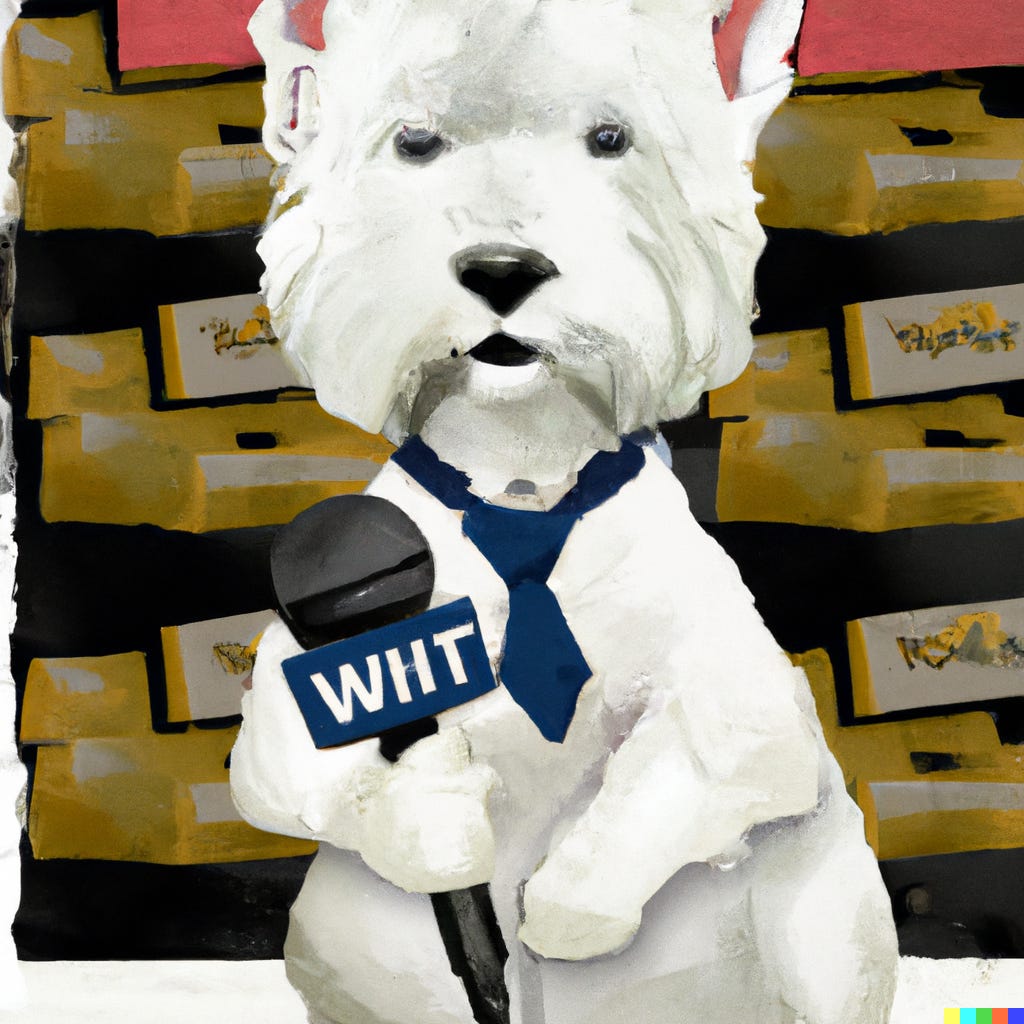
To begin with, I have questions about whether you can rightly say that Journalism is a profession. Meriam Webster says a profession is “a calling requiring specialized knowledge and often long and intensive academic preparation” (emphasis mine.) Those who track down news and report on it are professional observers, and I’d argue from a particular ‘point of view.’ One could argue that doesn’t require “specialized knowledge” and “intensive academic preparation.” As the aphorism goes “opinions are like a****les, everyone has one.”
Acquiring news through a media outlet (historically “news papers”) is, in the span of human history, a relatively recent occurrence (the first Newspaper was published around 1605). Early on, the “journalist” was the guy that set the type or scribbled something to give the typesetter. I can imagine a printer wanting to provide his clients with something fresh to stimulate his trade. For that he needed someone to fill up the white space with words. One could argue that journalism has always been the opposite of contemplative silence.
In 1722, a mere 120 years after the first newspaper, 16 year-old Ben Franklin, who was apprenticed to his brother and printer James Franklin, had been pestering his brother to print some of his writings in James’s New-England Courant. For reasons unclear (Ben was a teenager and adults of that era didn’t give teens access to the cultural microphone?) James had demurred, so Ben authored 14 letters under the nom de plume “Silence Dogood” which the Courant published much to young Ben’s delight.
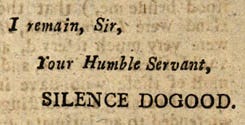
Today the letters are interesting mostly because of our affinity for Ben Franklin and his importance as one of the U.S.’s founders. It’s not surprising that now we view this as a quaint story and are unconcerned about what it might have done to the credibility of the New-England Courant. But apart from the annoyance of his brother, not much came of these letters being a work of fiction at the time. Clearly authenticity was negotiable early on.
“Now listen,' said George angrily, 'I’ve been in a newspaper office all evening and I know better than you what’s going on.'
'Nonsense. If there’s one place in the world where nobody knows what’s going on, it’s a newspaper office.”
― Jack Iams, The French Touch
The collection of news was and still is a business of entertaining people. You publish or broadcast what people want to take in. My non-positive epistomolgy believes a point of view is unavoidable. Everything has a bias in favor of a POV.
All people tend to drift toward offerings that sync with their own point of view. From the beginning, this set up a limited feedback loop which made the news insular, and because it was insular, it became relatively unreliable. Large cities featured at least one newspaper for each of the two political parties, and several other points of view as well.
I had a friend (long since passed) who told me about growing up in a mid-sized midwestern city. Her family took the Democrat paper, and all news came from that source (this was before Radio and Television.) She grew up believing that Republicans were monsters, rich folks who built up wealth at the expense of the common man. They weren’t human. Imagine her surprise when meeting a handsome young man who she liked and dated only to find out he was a Republican. Then she met his middle-class family, and her eyes were opened. They eventually married and remained that way until he passed away more than 50 years later.
We live in ghettos because we choose to live there. Journos exploit this weakness. When a journalist is selling content and defending a point of view, the news isn’t something that happens. It is discovered and manipulated. They are looking for something that will draw outrage and self-righteousness. If you become the object of the media’s focus, heaven help you.
“The problem with the media - is that if you talk to it, it will use things against you. And that if you don't talk to it, it will use things against you”
― Lauren Klarfeld
Journalists by necessity are ruthless when there is a by-line in the offing, and woe betide anyone who stands in the way of the “story.” As the internet has evolved, the distribution of content has been democratized, and the participation costs have been greatly reduced. Anyone can publish “news”. This broader fund of journalists has served to unmask the fiction that journalists were “truth seekers” as opposed to “POV Defenders.”
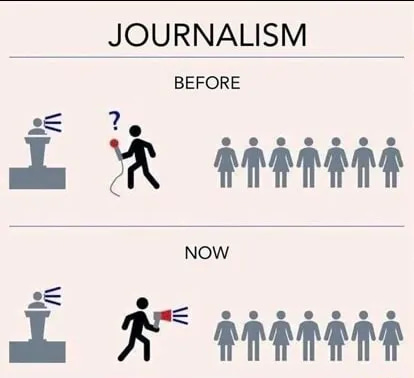
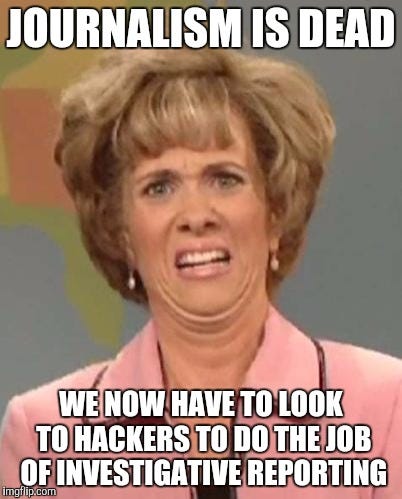
The meme below, while interesting seems to misunderstand that the ‘before’ picture never existed. It was staged to look that way. ‘Before’ and ‘now’, the journalist has always defended a POV. Perhaps because of Twitter and Substack, the MSM has given up trying to pretend the ‘before’ picture is true. They have stopped play acting. In some ways that is a good thing.
And what about investigative journalists? Name one that hasn’t been unmasked as a partisan shill.
Journalists can’t help but start with an assumption which is drawn from their POV. They then grab at facts that connect to that bias and ignore ones that don’t. And happy day if there aren’t any facts easily at hand. Then they can assume what facts will appear and present that story. Here’s a NY Times headline:
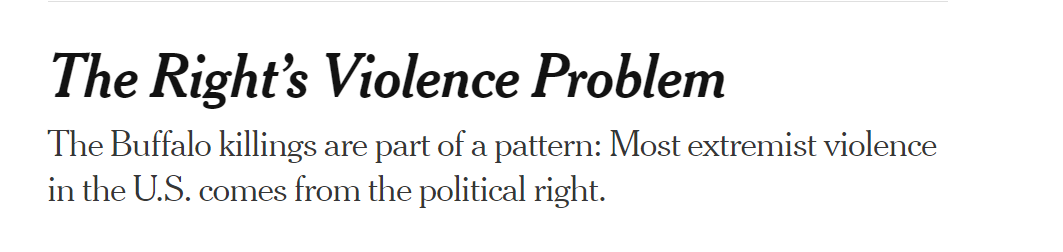
Most solo mass shooters are apolitical. They are mentally ill. If they have political interests, they are all over the place. But the facts don’t match the POV of the Times, and thus you get the headline above.
Is the Times outright lying? Perhaps. But that has not mattered in general since the “profession” began.
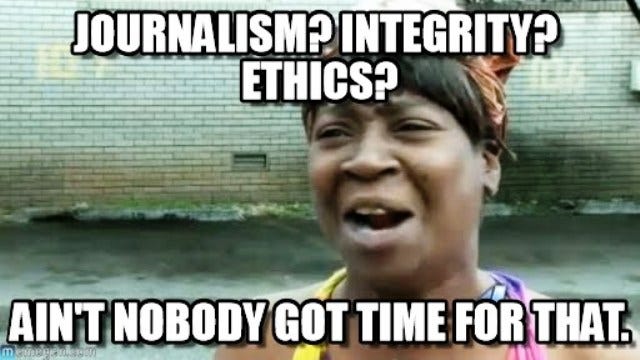
A journo’s POV is evident in the content they create, and I would argue its unavoidable. As consumers of news, we should never forget that. Let’s stop pretending that in the old days, journalists were actually honest and reported the truth.
In my view, the only thing that separates the professional for the rest of us these days is craftsmanship. Good production values for audio/video based content, good editing and writing for the written word.
But good craftsmanship for a journalist is what we called “a high school level education” in not the too distant past. English sentences. Assembled into paragraphs. The only distinction would be the age-old aphorism “Don’t bury the Lede.”
Too often, especially in the written word, grammar and spelling are given short shrift. I’m not worried when an amateur like myself messes up there speling and usage. If money is exchanging hands a professional should at least give us something that is readable.
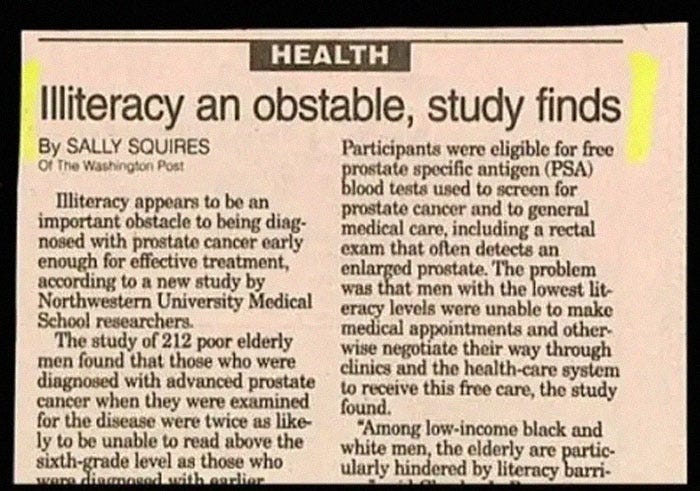
After all….
“A burro is an ass. A burrow is a hole in the ground. A reporter should know the difference.”
― Fred Reed